
Most american bettors lose money not because of bad luck, but due to a mix of emotional decisions and poor strategies. With over 90 percent of casual gamblers ending up in the red, understanding why losses happen is crucial. The betting world is filled with hidden challenges that impact both your wallet and mindset. By recognizing these common pitfalls, you can start to make smarter choices and protect yourself from the traps that drain so many accounts.
Table of Contents
- Core Reasons Bettors Lose Money
- How Odds And House Edge Work
- Psychological Traps Affecting Bettors
- Impact Of Chasing Losses And Overbetting
- Responsible Gambling And Loss Prevention
Key Takeaways
| Point | Details |
|---|---|
| Emotional Decision-Making | Bettors often make impulsive choices driven by emotions, leading to increased risks and losses. |
| Bankroll Management | Proper financial planning is crucial; bettors should limit each wager to 1-3% of their total funds to avoid significant losses. |
| Understanding Betting Markets | Recognizing that bookmakers have a built-in advantage through odds and margins is essential for making informed bets. |
| Responsible Gambling Techniques | Setting strict betting limits and monitoring emotional triggers can help maintain a balanced and healthy approach to gambling. |
Core Reasons Bettors Lose Money
Betting might seem straightforward, but numerous psychological and strategic pitfalls drain bettors’ bankrolls. Understanding these core reasons can help you avoid common mistakes that turn potential profits into consistent losses.
One primary reason bettors consistently lose money is emotional decision-making. Gambling psychology reveals that most people make irrational choices when money is at stake. Betting mistakes often stem from impulsive reactions rather than calculated strategies. Emotional betting typically involves chasing losses, increasing wager sizes after defeats, or making desperate attempts to recover previous losses. This approach transforms gambling from a strategic activity into a highly risky emotional rollercoaster.
Poor bankroll management represents another critical factor in betting failures. Most bettors fail to establish clear financial boundaries, risking more than they can afford to lose. Professional gamblers recommend allocating only 1-3% of total funds per individual bet, yet many recreational bettors routinely risk 10-20% or more on single wagers. This reckless approach guarantees long-term financial destruction. Strategic bettors understand that preservation of capital matters more than any single bet’s potential return.
Lastly, a fundamental misconception about betting markets contributes significantly to monetary losses. Many bettors mistakenly believe they can consistently outsmart bookmakers, who mathematically design systems ensuring their profitability. Bookmakers build complex algorithms and margin structures that statistically favor their position. Understanding true betting value requires sophisticated market analysis beyond simple win-loss predictions. Successful bettors recognize they’re playing against a mathematically optimized system, not just individual teams or athletes.
The path to betting success demands discipline, emotional control, and strategic thinking. Recognizing these core reasons for losing money is the first step toward transforming gambling from a potential financial drain into a potentially profitable activity.
How Odds and House Edge Work
Betting odds represent complex mathematical systems designed to ensure bookmakers consistently generate profits while creating an illusion of fair gambling opportunities. Understanding these mechanisms is crucial for bettors seeking to navigate the intricate landscape of sports and casino betting.
At its core, the house edge is a built-in mathematical advantage that guarantees bookmakers profit over time. How odds affect potential payouts demonstrates the sophisticated algorithms bookmakers use to calculate risk and potential returns. These calculations incorporate multiple variables including team performance, historical data, and probabilistic modeling. Essentially, bookmakers adjust odds to create a scenario where their potential losses are minimized while maintaining attractive betting opportunities for participants.

Margin calculation plays a critical role in understanding betting economics. Sophisticated market analysis reveals that bookmakers typically build a profit margin of 4-6% into their odds structure. This means that even when bettors make seemingly intelligent wagers, the underlying mathematical framework ensures the house maintains a statistical advantage. For instance, in a typical coin flip scenario with true 50/50 odds, a bookmaker might offer odds that effectively translate to a 52/48 split in their favor.
The complexity of odds calculation extends beyond simple probability. Modern bookmakers employ advanced statistical models and machine learning algorithms to dynamically adjust odds in real-time. These models consider an extensive range of factors including player injuries, weather conditions, team morale, and historical performance metrics. By continuously updating their algorithms, bookmakers can maintain their mathematical edge while presenting odds that appear attractive and potentially winnable to bettors.
Understanding these intricate mechanisms is not about discouraging betting, but empowering bettors to make more informed decisions. Recognizing the mathematical realities behind odds and house edge allows players to approach gambling with realistic expectations and strategic thinking.
Psychological Traps Affecting Bettors
Betting is as much a psychological challenge as a financial one, with numerous mental pitfalls that systematically undermine bettors’ decision-making processes and long-term success. Understanding these psychological traps is crucial for maintaining rational and disciplined gambling behavior.
Cognitive biases play a significant role in destructive betting patterns. The psychology behind sports betting reveals how deeply ingrained mental shortcuts can lead bettors astray. The confirmation bias causes individuals to seek information that supports their existing beliefs while dismissing contradictory evidence. For gamblers, this means selectively remembering past wins and rationalizing losses, creating a distorted perception of their actual betting performance.
Emotional volatility represents another critical psychological trap. Bettors frequently experience what psychologists call the sunk cost fallacy, where they continue investing money into losing bets to justify previous losses. Maintaining betting discipline requires recognizing and interrupting these emotional spirals. When losses accumulate, many bettors enter a state of tilting – an emotional condition characterized by increasingly irrational and aggressive betting behavior driven by frustration and desperation.
Trauma and personal mental health significantly influence gambling behavior. Recent psychological research demonstrates how unresolved emotional experiences can manifest as compulsive betting patterns. Individuals struggling with anxiety, depression, or past traumatic experiences may unconsciously use gambling as a coping mechanism, seeking temporary emotional relief through the excitement and distraction of betting. This psychological dynamic transforms gambling from a recreational activity into a potentially destructive emotional escape route.
Recognizing these psychological traps is the first step toward developing a healthier, more rational approach to betting. By understanding the mental mechanisms that drive poor decision-making, bettors can implement strategies to maintain emotional distance, make calculated choices, and protect their financial and psychological well-being.
Impact of Chasing Losses and Overbetting
Chasing losses and overbetting represent two of the most destructive behaviors in gambling, systematically eroding bettors’ financial stability and psychological resilience. These interrelated patterns transform betting from a potentially strategic activity into a dangerous emotional spiral that guarantees long-term financial destruction.
Chasing losses is a psychological trap where bettors attempt to recover previous financial setbacks by making increasingly risky and larger wagers. Risks of sports betting strategies demonstrate how this behavior creates a catastrophic feedback loop. When bettors lose money, the immediate emotional response is often panic and desperation, leading them to increase bet sizes and frequency in a misguided attempt to recoup losses. This approach fundamentally contradicts sound betting principles, as each subsequent bet carries independent risk regardless of previous outcomes.
Overbetting emerges as a direct consequence of emotional decision-making and poor bankroll management. Professional analysts consistently warn that betting more than 2-5% of total bankroll on a single wager dramatically increases the probability of financial collapse. The psychological mechanism driving overbetting typically involves a combination of overconfidence, emotional volatility, and a distorted perception of probability. Bettors convince themselves that the next bet will be the one that reverses their fortunes, despite overwhelming statistical evidence suggesting otherwise.
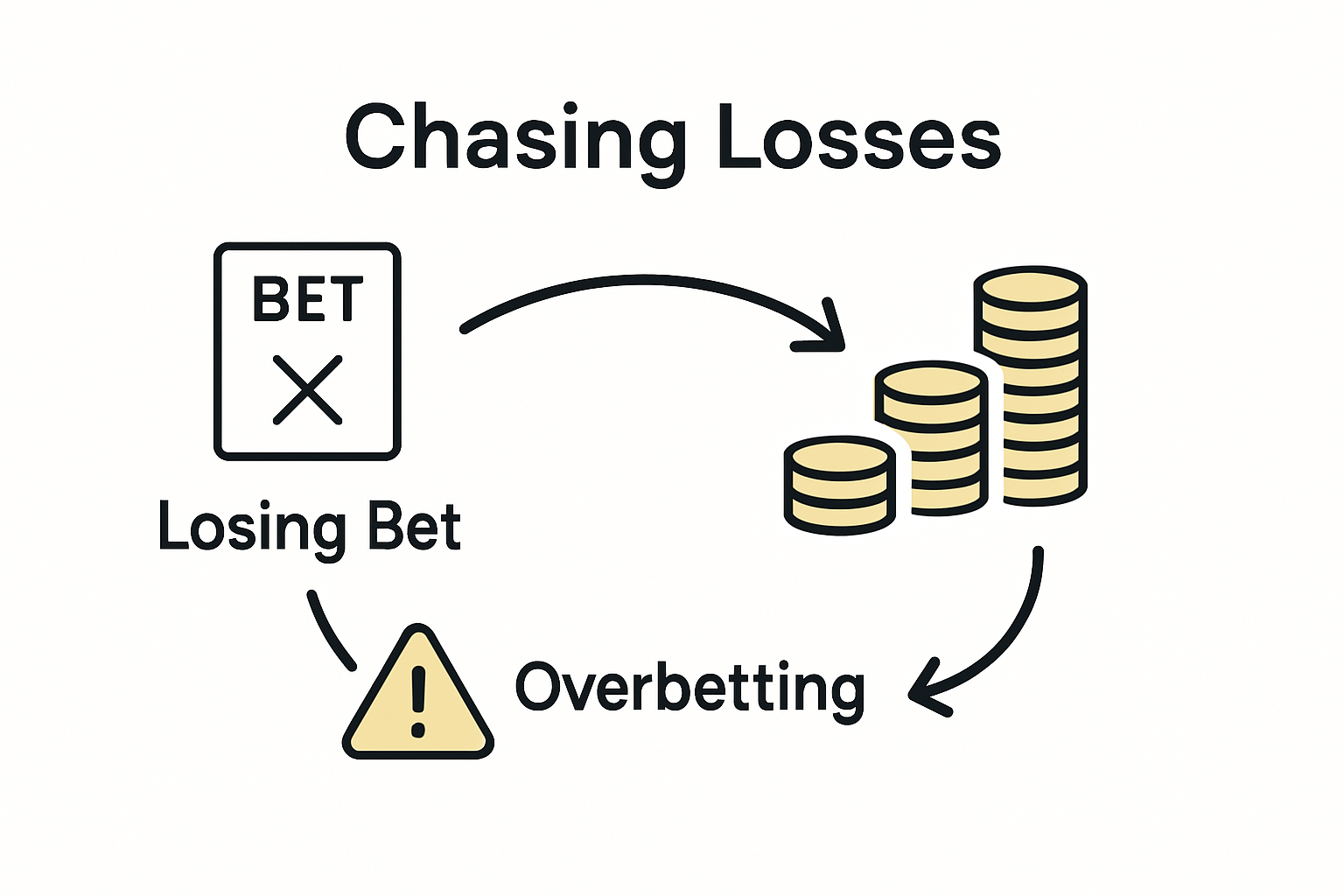
The cumulative impact of these behaviors extends beyond immediate financial losses. Chronic chasing and overbetting can lead to severe psychological consequences, including increased anxiety, depression, and potential gambling addiction. The neurochemical excitement of potential winning creates a powerful reinforcement cycle that makes rational decision-making increasingly difficult. Each loss becomes another opportunity for potential redemption, trapping bettors in a self-destructive pattern that progressively undermines their financial and mental well-being.
Breaking free from these destructive patterns requires ruthless self-awareness, disciplined bankroll management, and a fundamental reframing of betting as a calculated, strategic activity rather than an emotional escape mechanism.
Responsible Gambling and Loss Prevention
Responsible gambling represents a critical approach to maintaining financial and psychological well-being while engaging in betting activities. It encompasses strategic methods to prevent destructive behaviors, protect personal resources, and maintain a healthy relationship with gambling entertainment.
Betting limits serve as the foundational mechanism for responsible gambling. Responsible gambling tools can significantly mitigate potential risks by establishing clear financial boundaries. These tools typically include self-imposed deposit limits, loss thresholds, and time management controls that interrupt potentially harmful gambling patterns. By proactively setting strict financial parameters, bettors can prevent impulsive decisions that lead to substantial monetary losses.
Psychological self-monitoring represents another crucial aspect of responsible gambling. Successful bettors develop robust emotional regulation techniques that prevent reactive betting behaviors. This involves recognizing personal triggers, understanding emotional states that compromise rational decision-making, and implementing strategic pauses during high-stress betting scenarios. Recognizing warning signs such as persistent negative emotions, increasing bet sizes to chase excitement, or experiencing financial strain becomes essential in maintaining a balanced approach to gambling.
Technology now offers sophisticated tools for supporting responsible gambling practices. Advanced platforms provide real-time analytics that track betting behaviors, highlight potential problematic patterns, and offer immediate interventions. These systems can automatically trigger cooling-off periods, provide detailed spending reports, and offer personalized recommendations for maintaining healthy gambling habits. The integration of machine learning algorithms enables more nuanced detection of potentially destructive betting patterns, creating a proactive approach to preventing gambling-related harm.
Ultimately, responsible gambling is about maintaining control, understanding personal limits, and treating betting as a form of entertainment rather than a potential financial solution. By embracing strategic self-management, bettors can protect themselves from the significant psychological and financial risks associated with uncontrolled gambling behaviors.
Take Control of Your Betting Journey with Betco AG
The article reveals critical challenges many bettors face such as emotional decision-making, chasing losses, and poor bankroll management that lead to constant money loss. If you want to transform your betting experience and avoid these common pitfalls you need the right tools and support. At Betco AG, we offer a comprehensive platform designed to help you stay disciplined and make smarter, more strategic wagers by combining live betting markets, an expansive game library, and powerful features like the Props Builder.

Discover how embracing responsible gambling can protect your bankroll and promote long-term enjoyment. Explore our Responsible Gambling and Security | Betco resources to learn essential strategies that keep your bets controlled and your emotions in check. Ready to apply expert insights while enjoying the thrill of sports and casino games? Visit Betco AG now and start betting smarter with access to detailed gameplay stats, flexible deposit options, and professional support. Enhance your knowledge with our Sports Betting Guides and Resources | Betco and take the first step to stop losing and start winning today.
Frequently Asked Questions
Why do emotional decisions lead to betting losses?
Emotional decision-making often results in irrational betting behaviors, such as chasing losses or increasing bet sizes after defeats, transforming gambling into a risky emotional rollercoaster.
How does poor bankroll management contribute to losses in betting?
Poor bankroll management leads bettors to risk more than they can afford to lose, often placing large wagers that can quickly deplete their funds, contradicting principles of strategic betting.
What are cognitive biases that affect betting decisions?
Cognitive biases, like confirmation bias, can cause bettors to favor information that confirms their beliefs while ignoring evidence to the contrary, leading to distorted perceptions of their betting success.
What strategies can help prevent chasing losses?
To prevent chasing losses, bettors should establish clear betting limits, practice emotional regulation techniques, and avoid impulsive decisions during high-stress situations.